

Published on 3/30/2026
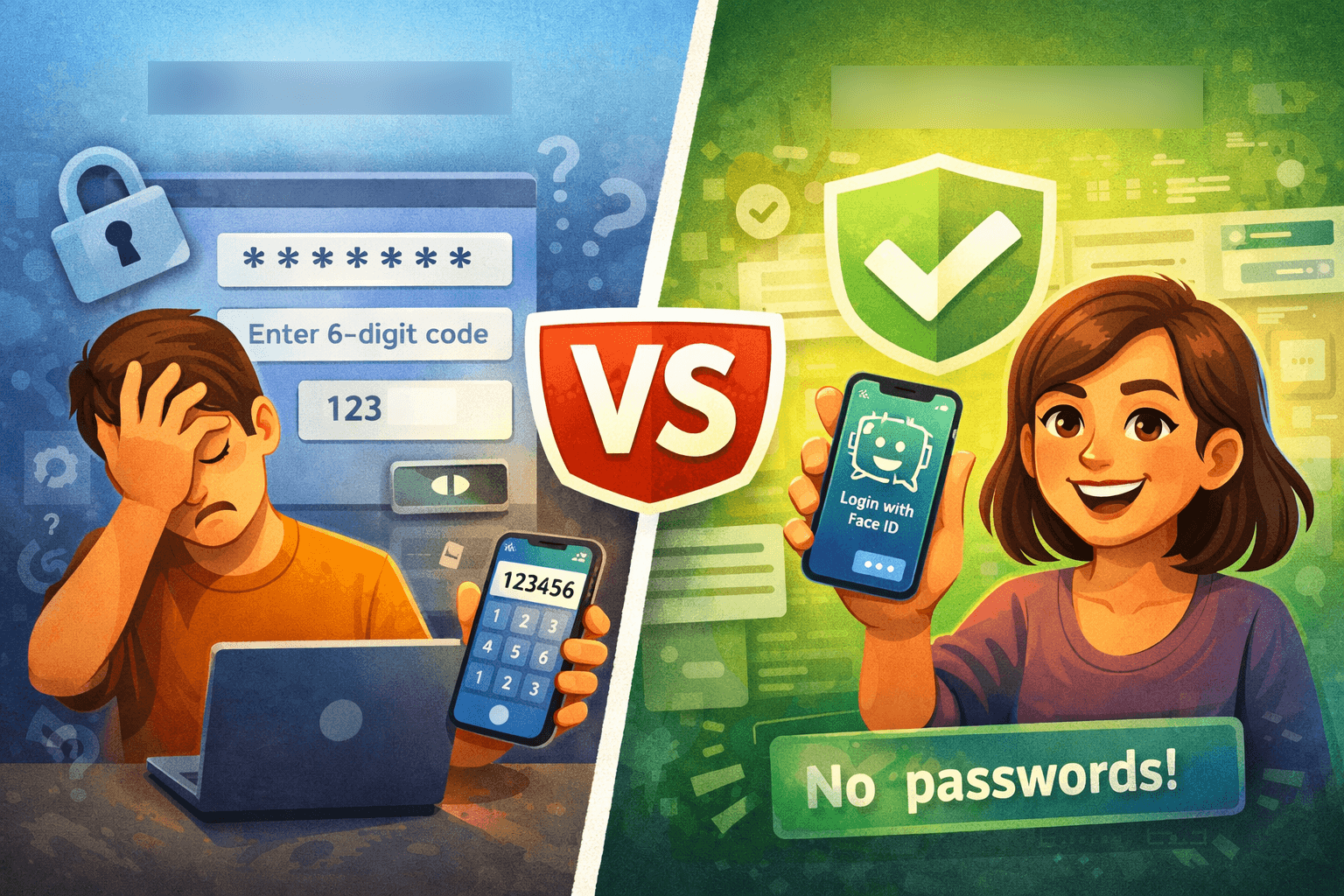
Typing usernames and passwords, waiting for SMS codes, digging through countless entries in your authenticator app. We feel your pain, truly.
Most people think of authentication as a battle against hackers, bots, and weak passwords. In reality, it starts with a much simpler idea. There are only three things authentication can rely on: something you know, something you have, or something you are.
Traditional username-and-password logins live entirely in the first category: something you know. That sounds fine until you remember the obvious flaw. If someone else can figure it out, guess it, steal it, or trick you into giving it away, then that 'secret' is no longer much of a secret at all.
That is exactly why two-factor authentication became so popular. It adds a second layer to make a weak model less fragile. In other words, 2FA is often used to patch up a login method that was already shaky to begin with. It helps, of course, but it is still built on top of the same old foundation.
CentralAuth takes a different route. Instead of trying to make passwords safer, it removes passwords entirely.
That means no password resets, no reused credentials, and no anxious guessing about whether a login is strong enough. CentralAuth is fully passwordless, and every authentication method it offers fits naturally into one of the stronger categories: something you have or something you are.
With passkeys, users authenticate using a modern cryptographic method tied to their device and biometric verification. With an email login link or code, access is delivered directly to the email account they already control. With the CentralAuth app, you can log in everywhere with one account, using your own phone and biometric authentication. And for teams that already rely on external identities, OAuth providers such as Google, Microsoft, and GitHub make it easy to sign in without inventing yet another password.
The point is not that security should be complicated. The point is that good authentication should be simple, resilient, and proportional to the risk. Passwords try to make 'something you know' do too much. 2FA makes that compromise a little better. CentralAuth skips the compromise altogether.
So yes, two-factor authentication is better than a password alone. But it is still a workaround. CentralAuth is built around something cleaner: authentication that starts from stronger ground.
No password. No unnecessary friction. Just safer ways to log in.
Want to experience true frictionless authentication? Start using CentralAuth today!