

Published on 3/17/2026
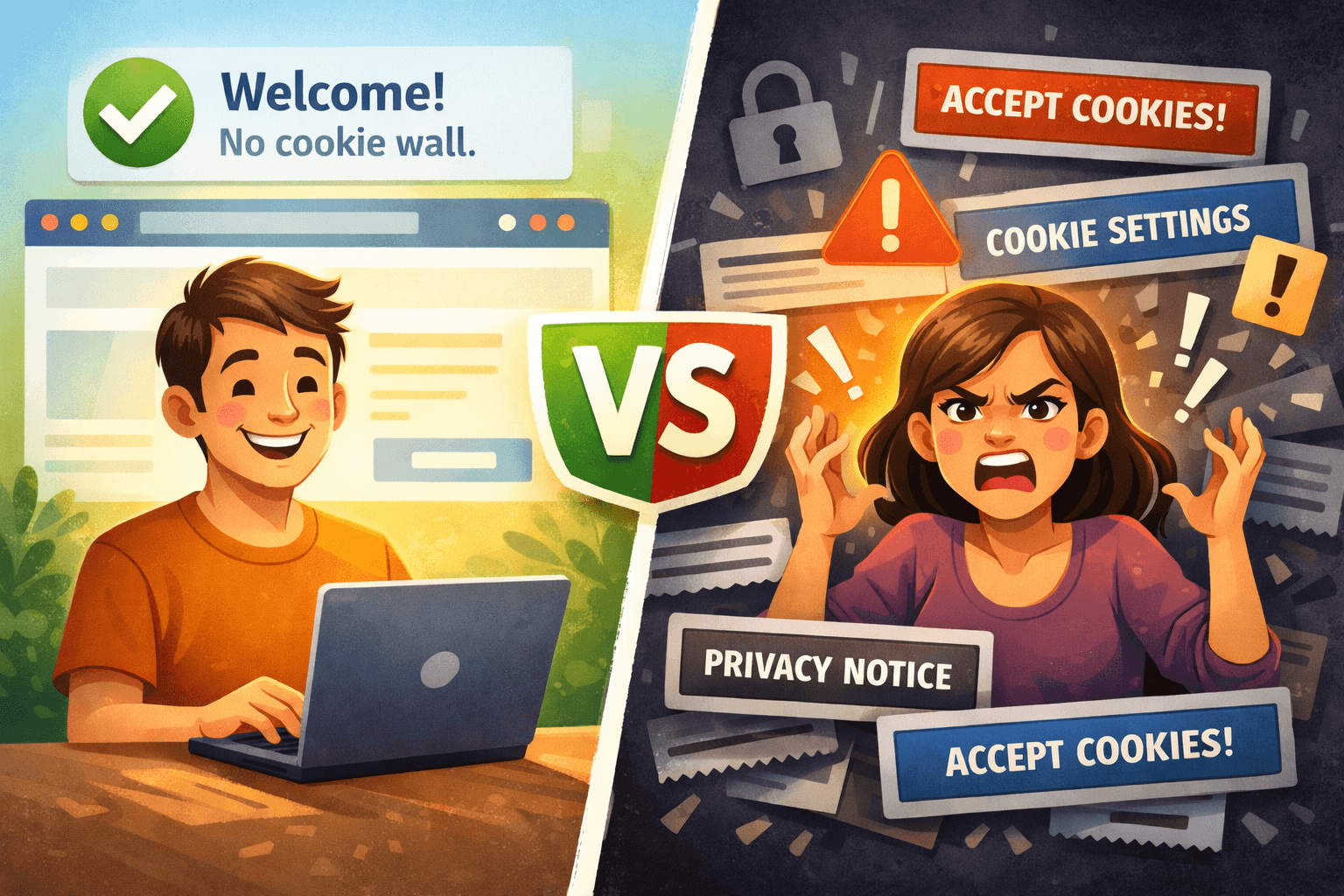
Open almost any website today and the first thing you'll see isn’t the content, it's a cookie banner. A pop-up asking you to accept, reject or configure tracking. It's just a routine part of browsing the web. Or is it?
The problem
The reason most websites display cookie consent banners is simple: they store non-essential cookies. These are typically used for analytics, advertising or cross-site tracking. Under privacy regulations such as GDPR, websites must ask for permission before placing these cookies on a user's device. The result is the familiar experience of navigating through consent dialogs before you can even read the page.
But cookie banners are really just a symptom of a broader issue: unnecessary tracking.
CentralAuth takes a different approach. From the start, it was designed around a privacy-first principle. The platform only stores cookies that are strictly required for the authentication process itself. These functional cookies ensure that sessions work correctly and securely, but nothing more.
There are no analytics trackers, no marketing pixels and no hidden third-party scripts running in the background.
Keep the cookies in the jar
Because CentralAuth doesn't use non-essential cookies, there's no need to ask users for consent in the first place. That means no cookie banners, no interruptions and no dark patterns pushing people toward an "Accept All" button. Users simply arrive on the page and continue with what they came to do.
For an authentication service, this matters even more. Authentication sits at the center of a user's digital identity, which means trust should be the default. By minimizing data collection and avoiding tracking technologies altogether, CentralAuth keeps the experience predictable, transparent and respectful of user privacy.
The benefit extends to developers as well. Integrating CentralAuth doesn't introduce additional tracking layers or consent requirements into your application. The authentication layer remains clean, focused, and compliant by design.
Privacy by design, for real this time
Privacy on the web is often treated as something users must actively defend with settings and preferences. CentralAuth demonstrates that when you start with a privacy-first mindset, a simpler experience naturally follows.
Sometimes the best way to protect user privacy is simply not to collect the data in the first place.
Want to experience true privacy-first authentication? Start using CentralAuth today!